 Sorrento City Guidebook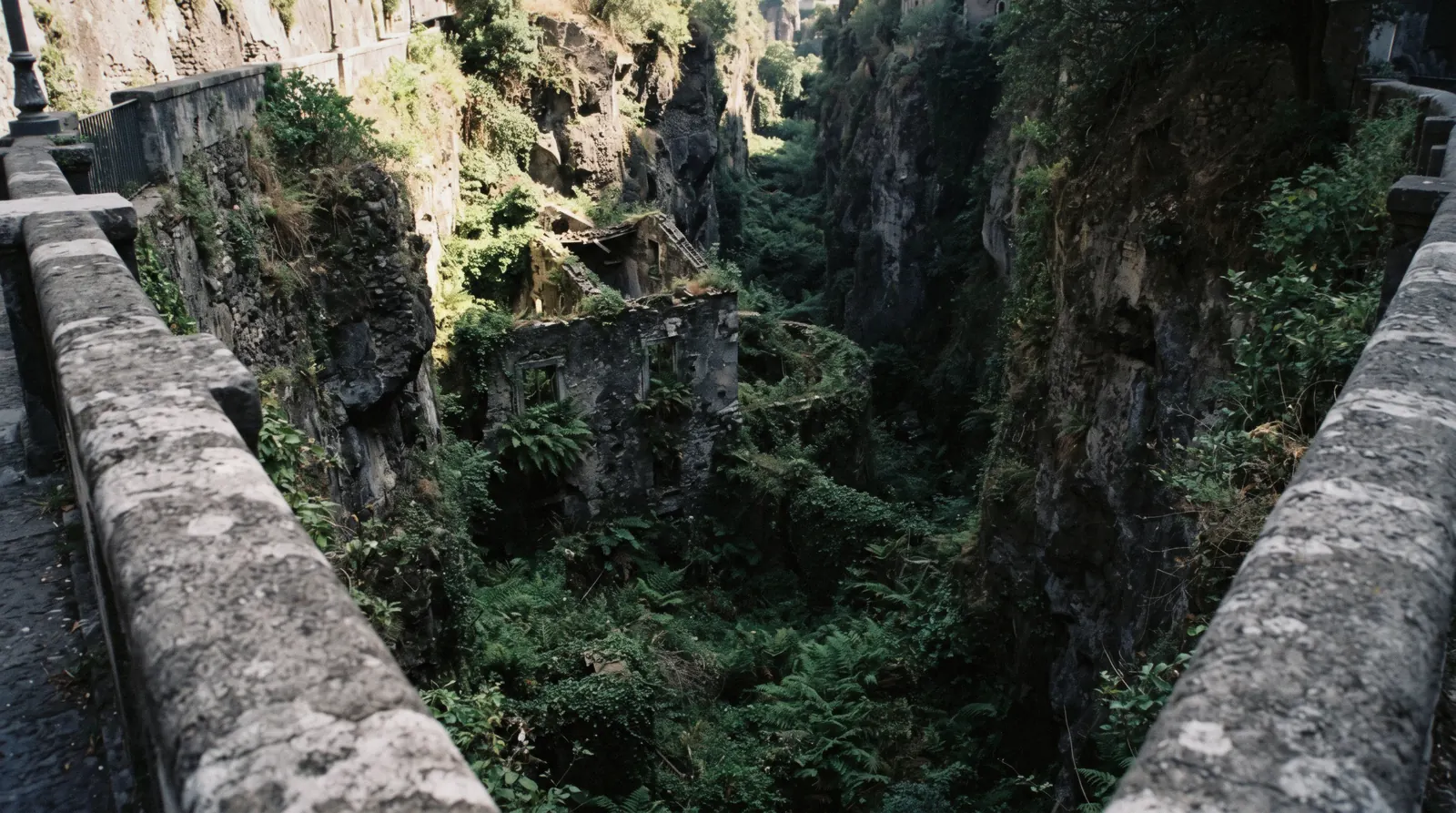
Vallone dei Mulini: Sorrento's Valley of the Mills
The Vallone dei Mulini is the crack in Sorrento's tuff plateau that the town grew across: a deep ravine behind Piazza Tasso where a flour mill and a sawmill worked the damp floor for centuries, were cut off from the sea in 1866, and were abandoned to a microclimate so humid that rare ferns now wrap the ruins. You cannot walk down there, and that is the point of this page: where the Vallone dei Mulini actually shows itself, why the floor is closed, what the mills were and when they died, and the car-park confusion that sends drivers to a garage instead of a gorge.
Quick answer What the gorge is, why you cannot enter, and where the two viewpoints are
The Vallone dei Mulini, Sorrento's Valley of the Mills, is a deep tuff ravine behind Piazza Tasso where a stone flour mill and a sawmill worked from the 13th century before the valley was cut off from the sea in 1866 and abandoned to the ferns. There is no access to the ravine floor: the sight is the view from above, free, from the Via Fuorimura railing at the edge of Piazza Tasso.
Key takeaways
- There is no ticket and no hour; pair the railing with the Piazza Tasso parapet and the old town loop, all free, on the one-day itinerary
- A guided walking tour of the centre stops at the gorge and explains the geology; the free version is the panel-less railing and this page
- The floor is private property and closed for preservation, so a fence between you and the mill is the visit working as designed
Key facts
Opening hours
| Daily, all year | The viewpoints are public street; always accessible |
|---|
Closed None. The ravine itself has no public access to close; you view it from the street above
Admission
- Adult
- Free. The gorge is a view from public ground, not an attraction with a door
- Free
- Both viewpoints: the parapet where Via Fuorimura leaves Piazza Tasso and the lanes of the Via Fuoro family on the west side
Planning it
- Time needed
- Not stated by any official source, because no managing body exists; our routing: 10 minutes for the railing and the photograph
- Address
- Behind Piazza Tasso, 80067 Sorrento (NA), Italy; primary viewpoint on Via Fuorimura
Seeing the gorge: the free look and the guided context
The free row is the sight itself, checked on 12 September 2026; the guided rows are the two centre walks whose routes take in the vallone, priced as listed on the platform the same day.
The gorge itself costs nothing, so the only purchase is whether a guide's explanation is worth more to you than the bare view.
| Option | Price | What you get | Cancel | Book |
|---|---|---|---|---|
| The viewpointsAnyone content to stand at the railing with this page open | Free (no ticket exists) | The mill ruins, the fern canopy and the cliff walls from the Via Fuorimura railing | Nothing to cancel | Official site |
| Walking tour with a local guide, 2.5 hFirst-morning visitors who want the gorge read properly, geology and all | $57 listed | A private orientation walk through the centre with the vallone in the route area | Free up to 24 hours before | Check Availability |
| Heritage walk with lemon grove, 3 hWalkers who want heritage streets, sea views and a lemon grove in one loop | $93 listed | A guide through the historic streets, cliff viewpoints and a grove visit | Free up to 24 hours before | Check Availability |
The ravine has no ticket office and no managing body, so the free row links the city's official tourism portal instead. Platform prices are the listed USD figures on 12 September 2026; the platform bills in your account currency.
Guided walks that take in the vallone
No platform sells a tour down into the ravine, which is closed; the honest products are the centre walks that pause at the viewpoints. Every card links to the operator's own page, where the date calendar shows live availability. Prices are the listed USD figures checked on 12 September 2026.
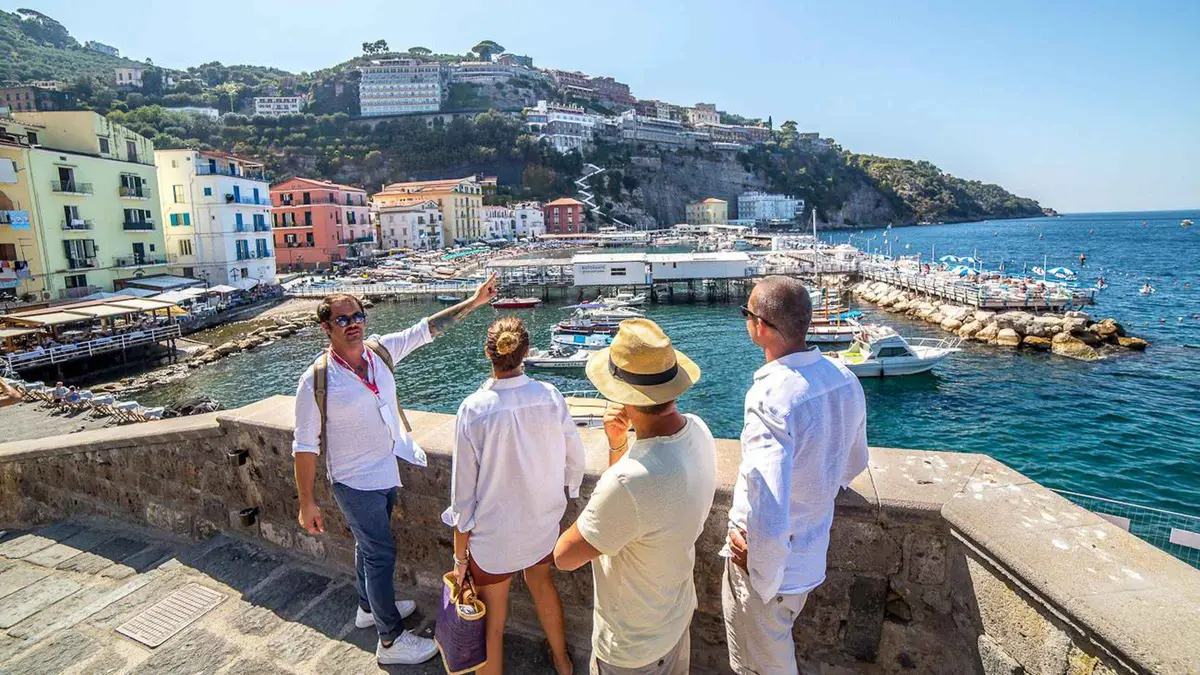 from $57
Sorrento: Walking Tour with Local Guide
A 2.5-hour private orientation walk with a local guide — the first-morning option.
Check Availability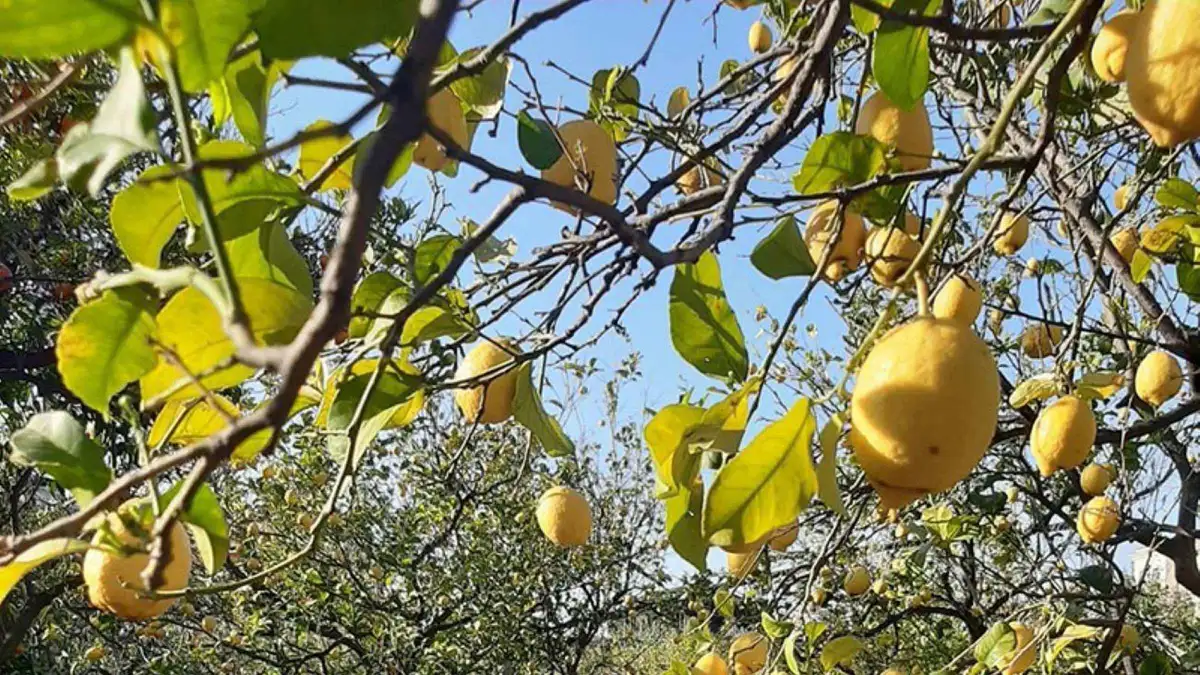 from $93
Sorrento Experience: Heritage Walk, Sea Views & Lemon Tour
A three-hour small-group heritage walk that ends at a lemon grove above the town.
Check Availability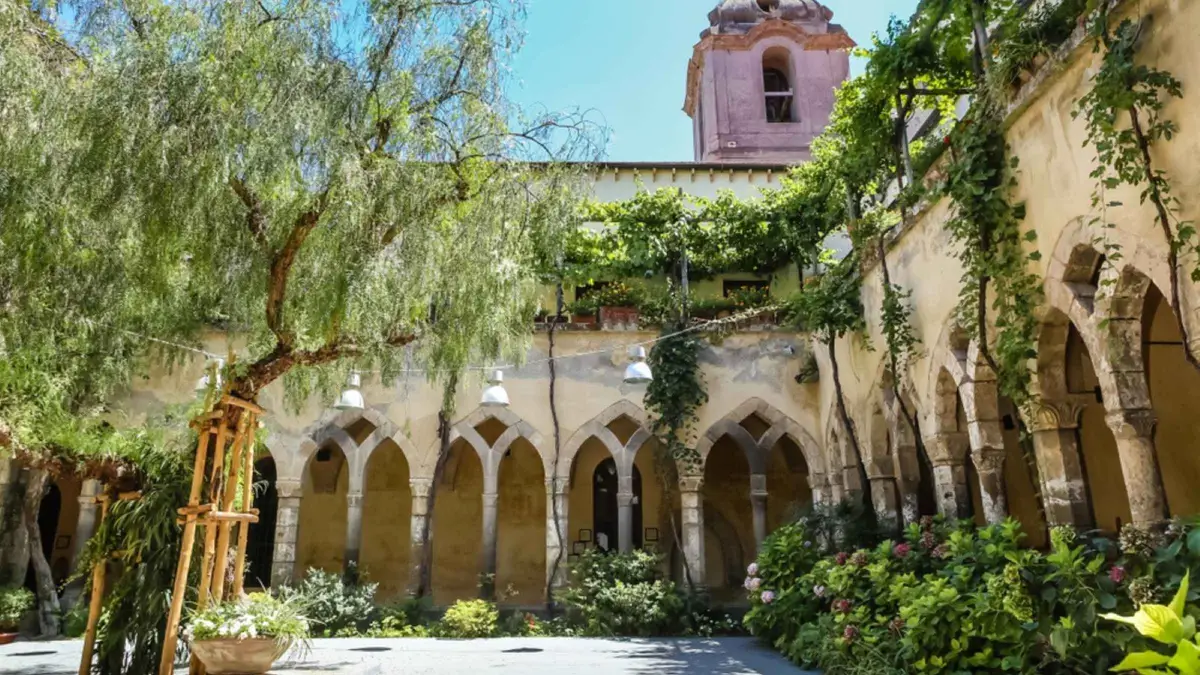 from $41
Sorrento: Walking Tour with Olive Oil and Limoncello Tasting
A two-hour private walk through the old town with olive oil and limoncello tasting stops.
Check AvailabilityPrices, ratings and details are the platform's own, checked in Q3 2026; dollar figures are the listed prices — the platform bills in your account's currency.
What the ravine is
Sorrento sits on a plateau of yellow tuff, volcanic rock laid down in layers, and the Vallone dei Mulini is one of the cuts the water made through it. English Wikipedia dates the valley's origin to the release of waters into a tuff plain about 37,000 years ago, following an eruption of the Campi Flegrei, the volcanic field across the bay; the two streams that carved it, the Casarlano-Cesarano and the Sant'Antonino, still give the gorge its direction, running down towards the sea behind the town's main square.
The gorge was once one of five valleys that marked the natural boundaries of the peninsula's towns, and for most of its life it was a route, not a ruin: goods came up it from the coast and grain went down to the mills. The tuff walls are high and steep, the floor is narrow, and the geometry is why the town eventually built straight across it rather than around it. What you see from the railing is the last stretch of that cut before it reaches the sea, with the mill building planted in the greenery like a ship at anchor.
The humidity is the engine of everything you photograph. Because the walls block ventilation and the sun reaches the floor for only a sliver of the day, the ravine keeps its own climate, cooler and far wetter than the street above, and the vegetation has closed over the ruins completely. The gorge reads wild at ten metres from a bus stop, which is the collision that makes it one of the most photographed corners of the town.
The pick, in one sentence: treat the vallone as a ten-minute geological stop on the centre loop, best paired with the Piazza Tasso parapet, and do not budget it more without knowing the floor is out of reach.
The mills and their dates
The name means Valley of the Mills, and the mills earned it. Stone flour mills worked the gorge floor, grinding grain for the town, with a sawmill alongside cutting wood for the shipbuilding trade that supported the coast. The dates are where honesty is owed, because the two main sources disagree: English Wikipedia puts the historic flour mills as far back as the 13th century, while the town histories describe a mill built in the 1600s alongside the sawmill. Both agree on the essentials, the mill first and the sawmill after, and no official body adjudicates; we print the range.
The 1500s shaped the valley's economics: control over the area alternated between the Tasso and Correale families, and it was the Correale who built a port at the bottom of the valley, the harbour known today as Marina Piccola. The valley was a working centre through that period, its mills fed by the streams and its output moved by the port.
The end came in two steps. In 1866 Piazza Tasso was established, built across the gorge, and the construction isolated the mill from the sea; the valley lost its outlet, its traffic and, as the flow of the streams was altered, much of its water power. The sources differ again on the final date: the buildings were closed and abandoned in the 1940s by one account, while the town histories put the end of activities in the earlier 20th century, with water scarcity and rising humidity as the causes. The ruin you photograph is the result either way, and 1866 is the date both sides of the argument share.
One more date worth carrying: the mill site drew national attention when it was nominated in the FAI's I Luoghi del Cuore campaign, the Italian heritage fund's public vote for places worth protecting, which is as close as the gorge comes to an official status marker.
Why the ravine is closed to the floor
The floor of the Vallone dei Mulini is private property, and it is closed to visitors. Both facts come before any romance: this is not a park with restricted hours but a fenced chasm behind hotels and a multi-storey car park, and the fence is doing structural, legal and ecological work at the same time. No path down exists, no stairway is maintained, and the walls shed debris in a way the town has no reason to manage for tourists.
The conservation logic is real. The same humidity that grew the rare ferns grows slick stone, rotten timber and unstable masonry; the microclimate that makes the photograph is exactly the condition that would make a public path dangerous and, more to the point, would kill the plants the closure protects. The gorge is a functioning fragment of wild habitat in the middle of a town, and the town has chosen to keep it that way rather than to stabilise a ruin for foot traffic.
The practical consequence for your visit is simple: every legal way of seeing the vallone is from above. Anything that promises otherwise, a descent, a hidden stair, a tour of the floor, is either private access or fiction. The viewpoint list below is the complete public offer, and the honest summary is that the town keeps its gorge the way it keeps its cloister quiet: by not over-advertising it.
The two viewpoints and how to find them
The gorge shows itself from two public angles, and they behave differently. The primary one is the railing where Via Fuorimura leaves the north-west corner of [Piazza Tasso]: the pavement overhangs the cut, the mill building sits almost directly below the fence, and this is the angle every postcard uses. The second family of viewpoints is on the west side, in the lanes that carry the Via Fuoro name, where the gorge continues behind the buildings and you look into its upper stretch instead of its mouth. The two experiences take five minutes each, and the walk between them is two minutes downhill.
Light decides everything at both. In the early morning the sun reaches into the gorge and the mill facade reads stone-clear; by midday the light flattens into the ravine and the greenery swallows the detail; in the hour before sunset the whole cut goes soft and the railing fills with photographers. The gorge has no closing hour because it has no door, which means the quiet slot is whenever the tour groups are not: before 09:30 beats everything.
The table compares the two angles, worked up from the verified GPS pin of the gorge and our own walk times; distances are straight-line, so treat the walk minutes as estimates rather than promises.
Pick by what you want from the photograph: the mouth of the gorge for the classic mill shot, the upper stretch for the sense of the crack running through the town.
| Viewpoint | Where exactly | What you see | Best hour |
|---|---|---|---|
| Via Fuorimura railing | North-west corner of Piazza Tasso, where the road dips toward Marina Piccola | The classic angle: mill ruins directly below, fern canopy, cliff walls, the road bridge behind you | Before 09:30, or the hour before sunset |
| Via Fuoro lanes | The pedestrian lanes west of the centre, off the San Cesareo side | The upper stretch of the gorge behind the buildings, quieter, no parapet crowd | Midday, when the main railing is busy |
The car park that shares the name
Here is the confusion worth naming, because a fifth of the searches for this sight are actually people looking for somewhere to leave the car: a multi-storey car park in the centre carries the gorge's name. The Parcheggio Vallone dei Mulini sits at the north end of Via Fuorimura, a few steps from the railing, and drivers navigating by the gorge's name routinely end up in it. It is a garage, not the sight; the gorge is the hole in the ground beside it.
The mix-up runs the other way too. Visitors who park in the garage exit onto the street already at the best viewpoint, which makes it, by accident, one of the most convenient garages in town for the centre: the railing, Piazza Tasso and the lanes are all within minutes. The realistic parking options around the centre, and what they cost, are compared on the parking in Sorrento page; the short version is that the centre is largely closed to through traffic and every garage sits a short walk from where you actually wanted to be.
One related note completes the picture: the road that dives past the railing towards the sea is the descent to Marina Piccola, the ferry port. If you are walking down it, you are not entering the vallone but crossing over it on the bridge; the fence stays on your right and the view is behind you within thirty steps. The gorge is a look, not a route.
Photographing the gorge
The vallone is a photographer's problem in miniature: a dark subject in a deep hole, shot from a railing you cannot lean over. The fixes are all practical. Use the morning or the late afternoon for the vertical light that reaches the mill facade; shoot from the Via Fuorimura railing with a longer lens rather than a wide one, because the compressing distance is what makes the ruin read against the cliff; and take one frame from the Piazza Tasso parapet itself to catch the road bridge spanning the cut, which gives the depth its scale.
The greenery is the second subject. The fern layer, dense enough to hide the building's base completely, shifts through the year: spring growth is the softest, late summer the thickest, and after rain the whole gorge steams visibly, which is the photograph most people miss. The rare fern that botanists name in the gorge is Phyllitis vulgaris, a species the humid microclimate keeps alive here while the town bakes above it.
What does not work: flash, at any hour, on any camera, against a subject twenty metres down; drones, which the private status of the floor makes a poor idea; and the midday hour, which flattens the depth cues that make the photograph work. And the honest boundary again: no photograph is worth the fence. The best vantage points are public, marked by nothing, and free.
Dos and don'ts at the Vallone dei Mulini
Five decisions that make the stop work, all argued in the sections above.
Do
- Come before 09:30, when the railing is empty and the light still reaches the mill facade
- Shoot from the Via Fuorimura railing with a longer lens, then take one wide frame from the Piazza Tasso parapet for scale
- Pair the gorge with the Piazza Tasso parapet, the basilica and the cloister in one free centre loop
- Look for the steam after rain; the humid microclimate is the photograph most visitors miss
- Walk two minutes to the Via Fuoro lanes if the main railing is crowded; the upper stretch of the gorge is quieter
Don't
- Don't look for a path down; the floor is private property, there is no access, and the fence is the design
- Don't confuse the multi-storey car park of the same name with the sight; the gorge is beside it, not inside it (parking in Sorrento)
- Don't budget an hour; the railings take ten minutes and the surplus belongs to the lanes
- Don't fly a drone over the cut; the private status of the floor makes it a poor idea on every axis
- Don't expect signage or interpretation panels; there are none, which is why the guided walks sell
Five things most visitors do not know about the Vallone dei Mulini
The details that change what you are looking at, each with its source in brackets:
- The gorge is older than the town above it. The valley formed when waters were released into a tuff plain about 37,000 years ago after an eruption of the Campi Flegrei, and two streams, the Casarlano-Cesarano and the Sant'Antonino, carved it [English Wikipedia, Vallone dei Mulini].
- The mills' founding date is genuinely contested. English Wikipedia dates the stone flour mills as far back as the 13th century, while the town histories put the mill in the 1600s; no official body adjudicates, and both agree the sawmill followed [English Wikipedia; About Sorrento].
- 1866 is the year that killed it. When Piazza Tasso was established across the gorge in 1866, the mill was isolated from the sea; the buildings were abandoned by the 1940s, though some accounts put the end of activities earlier in the 20th century [English Wikipedia; About Sorrento].
- A Correale built the port at the valley's mouth. In the 1500s the Tasso and Correale families alternated control of the area, and the Correale port at the bottom of the valley became the harbour known as Marina Piccola [About Sorrento].
- The ferns are the rare part. The gorge's near-total lack of ventilation and its tuff walls keep a microclimate where Phyllitis vulgaris, a fern rare in the region, settles among the ruins [English Wikipedia, Vallone dei Mulini].
Vallone dei Mulini map: the viewpoints and the centre around them
The gorge pin is the Wikidata coordinate for the ravine behind Piazza Tasso; the other pins are the verified sights within a six minute walk, with walk minutes estimated from GPS distances.
Nearby Vallone dei Mulini: the three stops that pair with it
Walk minutes are our estimates from the GPS distances between the verified pins, starting from the Via Fuorimura railing.
Piazza Tasso
The square that was built across the gorge in 1866 and therefore caused the ruin you just photographed. Statues, the Carmine church and the town's zero point, all free.
2 min, up the dip of Via FuorimuraBasilica di Sant'Antonino
The patron saint's own church, with the crypt and the whale bones in the porch. Free entry, working church, and a different kind of old from the gorge's geological old.
4 min, north across the traffic lightsChiostro di San Francesco
The medieval cloister with the arches and the sea view, free to enter. The natural next stop on the centre loop, and the town's favourite wedding backdrop.
5 to 6 min, west through the lanesVallone dei Mulini questions
What is the Vallone dei Mulini in Sorrento?
It is the deep tuff ravine behind Piazza Tasso, the Valley of the Mills, where stone flour mills and a sawmill worked the gorge floor until the construction of the square in 1866 cut the valley off from the sea and the buildings were abandoned to the ferns. It is the single most photographed natural corner of the town.
Can you go down into the Vallone dei Mulini?
No. The ravine floor is private property with no public access, no maintained path and no tours of the floor; the visit is the view from the public railings above. Anything offering a descent is private access or fiction, and the fence is doing conservation work you would not want undone.
Where are the best viewpoints for the Vallone dei Mulini?
The classic angle is the railing where Via Fuorimura leaves the north-west corner of Piazza Tasso, with the mill ruins almost directly below. The quieter second option is the pedestrian lanes of the Via Fuoro family west of the centre, which look into the upper stretch of the gorge.
What are the opening hours of the Vallone dei Mulini?
There are none, in either direction: no managing body publishes hours because the viewpoints are public street, accessible at any hour, and the floor is permanently closed. The only hour that matters is the light, and before 09:30 beats the rest of the day.
Is there parking at the Vallone dei Mulini?
Yes, and this is the confusion to name: a multi-storey car park carries the gorge's name at the north end of Via Fuorimura, steps from the railing. It is a garage, not the sight, though it is genuinely one of the most convenient garages for the centre; the options and prices are compared on the parking in Sorrento page.
Why is the mill in the gorge abandoned?
Two reasons stacked: the construction of Piazza Tasso across the gorge in 1866 isolated the mill from the sea and killed its traffic, and the altered water flow plus the gorge's rising humidity ended the work altogether. The buildings were abandoned by the 1940s by the usual account, and the ferns took over from there.
Where the Vallone dei Mulini fits in a day
The gorge is a hinge, not a destination, and the itineraries treat it as one. On a one-day visit it slots between the Piazza Tasso parapet and the old town lanes in the morning, when the light still reaches the mill facade; the one-day itinerary sequences it exactly there. On a longer stay it works as the two-minute detour you take every time you cross the centre anyway, which is how the two-day and three-day plans use it.
Its second talent is weather. The viewpoint is public street, so it works in the rain, at night and in the week between Christmas and New Year when the paid sights run short hours; there is no ticket to refund and no slot to miss. Combined with the free Villa Comunale and the cloister, it makes the spine of the town's no-booking morning.
The pick, in one sentence: give the vallone ten minutes at the start of your first morning, take the photograph before the tour groups take theirs, and let the fence tell you the rest. When the town part of the plan is settled, the Sorrento city guide front page keeps the rest of the site one click away.
Vallone Dei Mulini on film
Three walk-throughs verified on YouTube: what the place actually looks like before you book anything.
Vallone dei Mulini or Valle dei Mulini or as Valley of the Mills. - Sorrento Italy - ECTV
Verified via oEmbed (Eric Clark's Travel Videos); matched query 'vallone dei mulini sorrento valley of the mills'.
Video: Eric Clark's Travel VideosValle Dei Mulini - Valley of the Mills - 1 The Trail
Verified via oEmbed (WRHaE - Walk, Run, Hike and Everything); matched query 'vallone dei mulini sorrento valley of the mills'.
Video: WRHaE - Walk, Run, Hike and EverythingHistoric Vallone dei Mulini (Valley of the Mills) in Sorrento, Italy #shorts #travelshorts
Verified via oEmbed (Travel Experiences); matched query 'vallone dei mulini sorrento valley of the mills'.
Video: Travel ExperiencesVideos load from YouTube only when you press play.
Reviewed Q3 2026 (July–September 2026); next review Q4 2026. Prices, hours and terms are set by the venue or operator and confirmed at checkout.
We may earn a commission if you book through one of our links, at no extra cost to you. Full affiliate disclosure