 Sorrento City Guidebook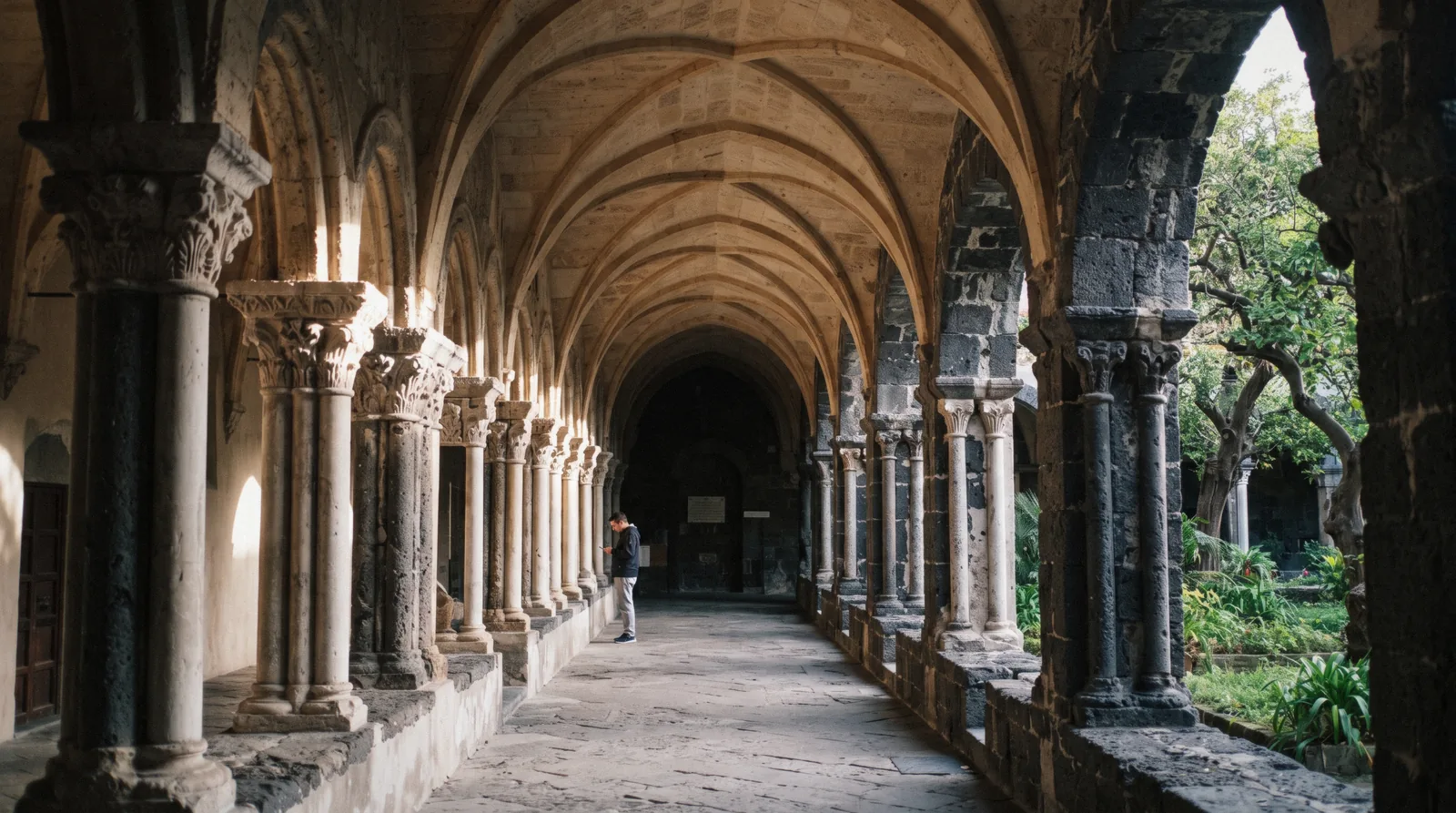
Chiostro di San Francesco, Sorrento: the 14th-century cloister
The Chiostro di San Francesco Sorrento keeps quiet even at noon: a 14th-century volcanic-stone cloister with crossed tuff vaults, one minute from the Villa Comunale terrace and free to enter whenever the gates are unlocked. This page covers the arches and their dates, the concert summer, the wedding question that fills the search bars, and what the church behind the cloister holds.
Quick answer Free entry, no published hours, the tuff arches, the concerts, and the wedding question answered honestly
The Chiostro di San Francesco is a fourteenth-century cloister of volcanic tuff, built on the remains of a seventh-century monastery, free to enter and without published clock hours. Crossed arches run along two sides, round arches on octagonal pillars along the other two, and in summer the courtyard hosts classical concerts; the cost of a wedding here is not stated by any official source.
Key takeaways
- Pair it with the Villa Comunale terrace one minute west; the two together are the cheapest half hour in town
- A guided walk through the historic centre puts the cloister in context with the lanes around it
- The top-ranking website for cloister weddings is a namesake venue in Naples, not this one; the honest answer on costs is below, and it is 'not stated'
Key facts
Opening hours
| Daily | Not published by the venue; visitor guides list 07:00 to 19:00, marked as varying |
|---|
Closed None published; the cloister is open-running public ground, and no authority prints a timetable
Admission
- Adult
- Free. The cloister and the church charge nothing to enter
- Free
- The courtyard, the church and the cloister walks; concerts are ticketed per event, with no central price list
Planning it
- Time needed
- Not stated by any official source; our routing: 20 minutes for the courtyard and church, longer when a concert or a wedding is in progress
- Address
- Via San Francesco 12, 80067 Sorrento (NA), beside the church of San Francesco and the Villa Comunale
Tickets and tours around the cloister
Entering the Chiostro di San Francesco costs nothing, so the comparison is the free visit against the guided walks that pass it, priced as listed on the platform and checked on 12 September 2026.
The cloister is free, so the money question is whether you want the guided context of the historic centre or the concert ticket that puts you inside the courtyard at night.
| Option | Price | What you get | Cancel | Book |
|---|---|---|---|---|
| The cloister itselfEveryone; the cloister and the church have no ticket and no turnstile | Free (no ticket exists) | The crossed tuff arches, the courtyard tree, the church of San Francesco | Nothing to cancel | Official site |
| Walking tour with a local guide, 2.5 hVisitors who want the medieval streets explained rather than just walked | $57 listed | Guide, historic centre and its stories, passing the cloister block | Free up to 24 hours before | Check Availability |
| Walking tour with olive oil and limoncello tasting, 2 hWalkers who want the lanes plus a tasting stop after the courtyard | $41 listed | Two-hour private walk through the old town with two tasting stops | Free up to 24 hours before | Check Availability |
Platform prices are the listed figures on 12 September 2026; the platform bills in your account currency. Concert tickets are sold per event and no central price list exists, so the table covers the walking options instead.
Walking tours that pass the cloister
Every card links to the operator's own page, where the date calendar shows live availability. Prices are the listed USD figures checked on 12 September 2026.
 from $57
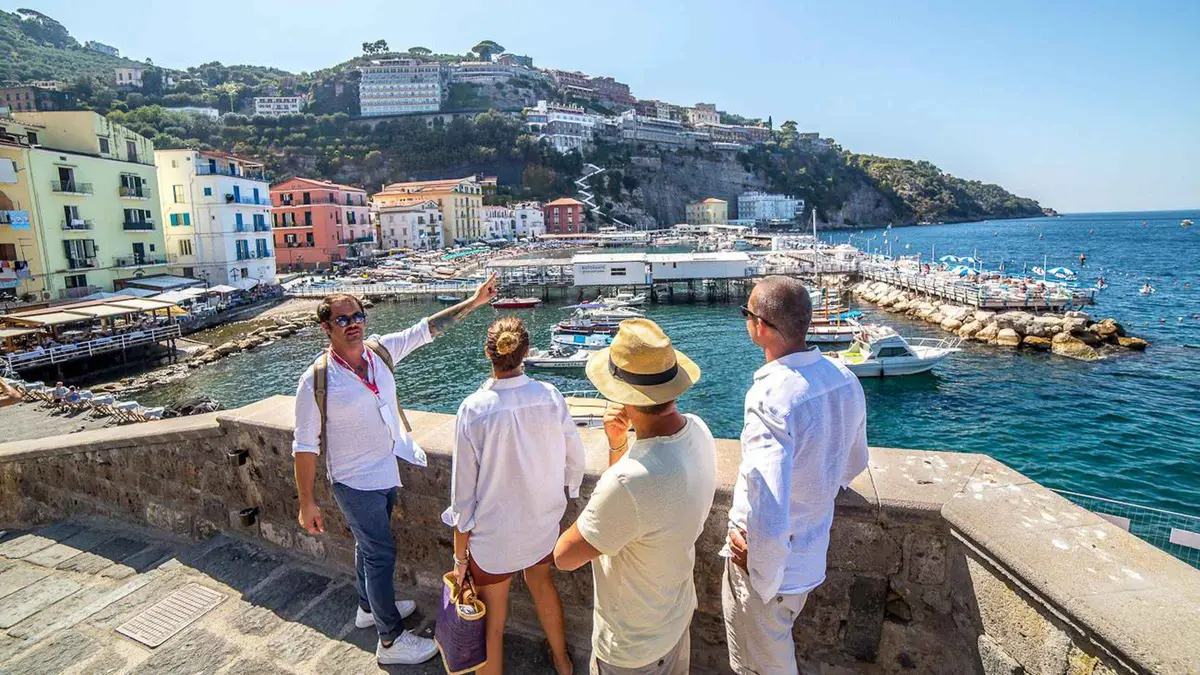
Sorrento: Walking Tour with Local Guide
A 2.5-hour private orientation walk with a local guide — the first-morning option.
Check Availability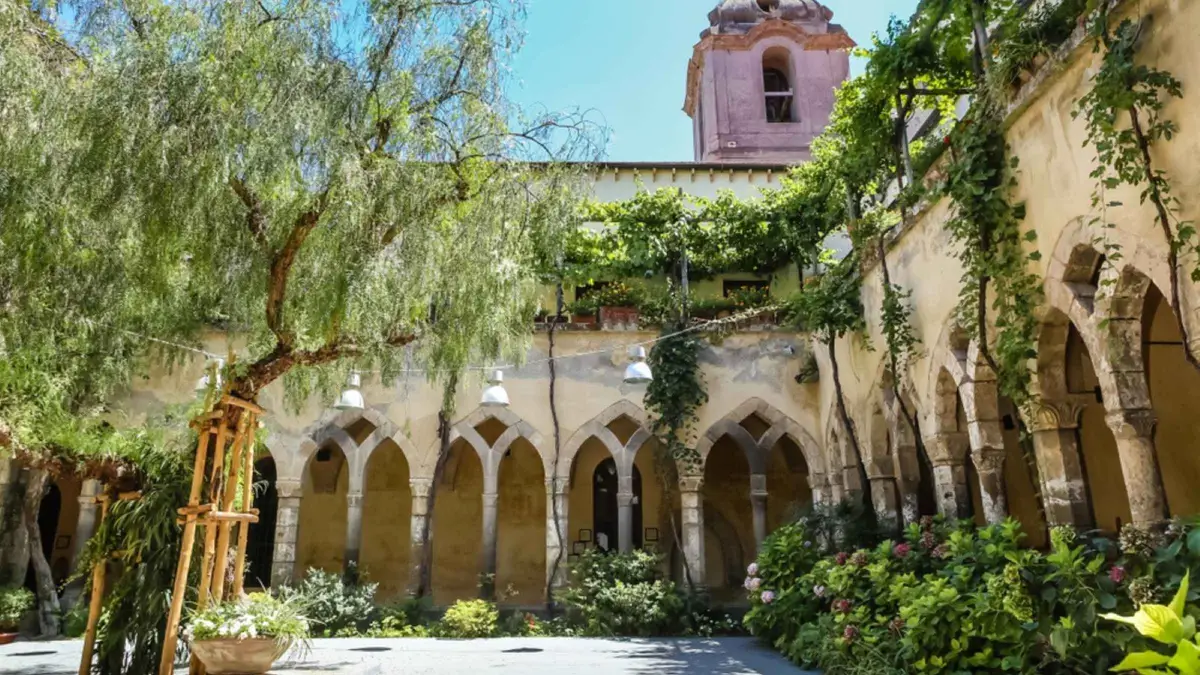 from $41
Sorrento: Walking Tour with Olive Oil and Limoncello Tasting
A two-hour private walk through the old town with olive oil and limoncello tasting stops.
Check Availability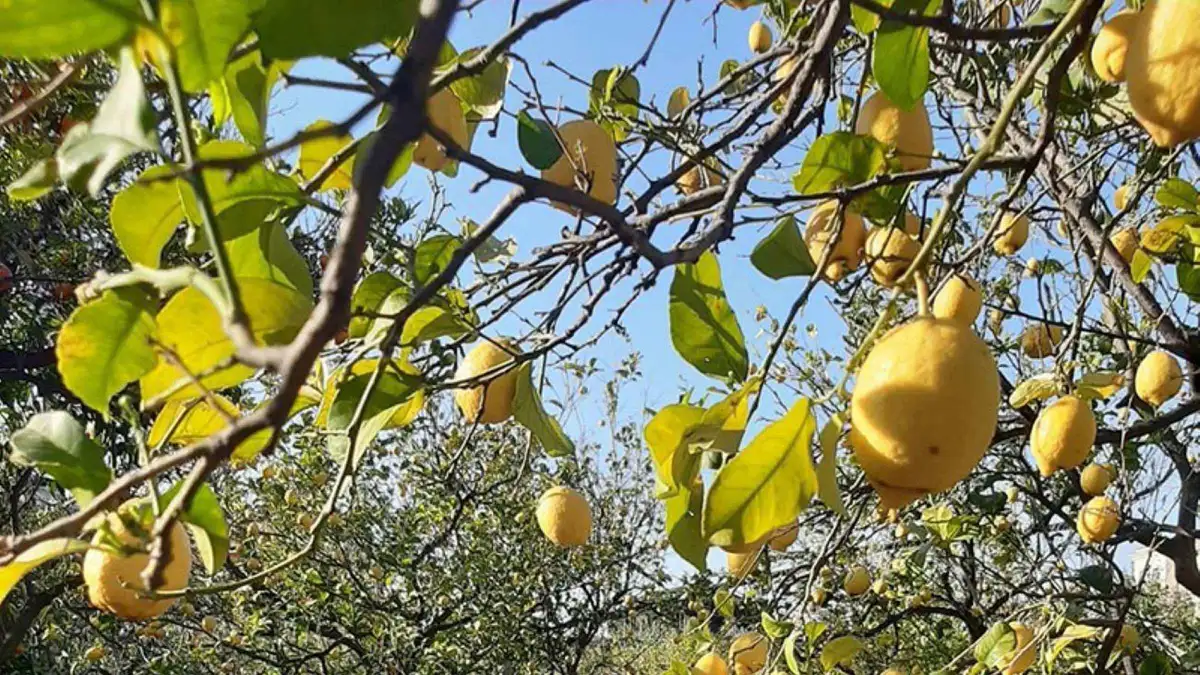 from $93
Sorrento Experience: Heritage Walk, Sea Views & Lemon Tour
A three-hour small-group heritage walk that ends at a lemon grove above the town.
Check AvailabilityPrices, ratings and details are the platform's own, checked in Q3 2026; dollar figures are the listed prices — the platform bills in your account's currency.
What the cloister is
A cloister is a covered walkway built around a courtyard, and this one is the quietest definition of Sorrento you can stand inside. The Chiostro di San Francesco was built in the course of the fourteenth century by the Franciscans, on the remains of a seventh-century monastery whose bones are still legible in the structure. Two sides carry crossed tuff arches woven together into mullioned pairs with a lunette, in a style the sources call arabesque; the other two sides carry round arches on octagonal pillars that were remodelled in 1447. The stone is the local volcanic tuff, cut soft and ageing warm.
The building was more than a prayer loop. In the fifteenth century the town used the cloister for its administrative life: city meetings were held inside it and the seal of the communal writings was kept here. It was reworked again in the early twentieth century, which is why the complex reads as layered rather than ruined. The Franciscan convent buildings rise directly off it, the refectory opens onto the courtyard, and a staircase climbs to the former convent rooms, where the Sorrento International Photo School and the Gallery Celentano now exhibit black-and-white photographs of Italian life by the contemporary local photographer Raffaele Celentano.
The setting does half the work. The cloister sits against the Villa Comunale terrace one minute to the west, the church of San Francesco stands at its shoulder, and the lanes of the old town begin just beyond the gate on Via San Francesco. Access is through a small door from the church as well as from the street, and the ground through the courtyard is flat, which makes it the easiest of Sorrento's medieval rooms to enter.
The pick, in one sentence: come in the first morning hour, when the light cuts between the arches and the courtyard is empty, and give it twenty unhurried minutes before the terrace next door.
The architecture, read slowly
Stand in the middle and turn once, slowly; the cloister is a lesson in four building campaigns, and every column is different in height and decoration.
The crossed arches are the signature. On the two sides where they run, the tuff arches interlace to form paired openings under a lunette, the arabesque rhythm that photographers come for; the pattern repeats but never repeats exactly, because the medieval masons cut to fit rather than to a template. On the round-arched sides, the octagonal pillars carry capitals with two different programmes: the northern capitals carry the coat of arms of the Sersale family, while the southern and eastern ones are in the Byzantine style with floral decoration. Look up at the lunettes and the thick garden wall behind, and the layering of the seventh-century monastery, the fourteenth-century rebuild and the 1447 remodelling reads like geological strata.
Three reused corner columns from pagan temples sit in the structure, the diocese's own heritage text notes them as functionally recycled, part of the same trade in classical materials that fed the basilica of Sant'Antonino across town. The effect of all of it is a courtyard that behaves like a sundial: before ten in the morning the sun cuts a clean lattice across the ground, by midday the whole square is in flat light, and in the late afternoon the arches glow from the west while the terrace next door fills for the sunset.
One practical note for photographers: the light is best from the north-west corner looking south-east, the tree at the centre gives the frame a trunk, and the bell tower on the right gives the vertical. Tripods are not banned by any sign we could verify, but the courtyard is also a through-route, so keep the gear against the wall.
Concerts and events in the cloister
In summer the courtyard turns into Sorrento's open-air concert hall. The cloisters host classical music concerts in the warm months, and the terrace beside them carries the town's musical and theatrical performances out into the open air. There is no year-round programme office with a published price list: each event is ticketed separately, and no central schedule or price sheet is published by any source we could verify, checked 12 September 2026.
The practical route to a seat is the town's own information service: the IAT tourist office lists what is on, with an info point at Piazza Sant'Antonino 1 (phone +39 081 533 5111) and a second office at Via Luigi De Maio 35 (+39 081 807 4033). Posters on the gate and on the Villa Comunale balustrade carry the week's programme in practice, which is how most visitors actually find out.
The rest of the year the courtyard works for the town rather than for tourists: events, ceremonies and the quiet through-route between the church, the terrace and the lanes. If a stage or rows of chairs are in place during your visit, walk it anyway; a dressed courtyard with the arches above it is the version the concert posters advertise, seen for free.
Weddings and private hire: what it costs
The question the search engines get asked most about this cloister is the cost of a wedding here, and the honest answer is: not stated. No official source publishes wedding or hire prices for the Chiostro di San Francesco. The courtyard is famously a wedding frame; the oblique-trunk tree at its centre has framed many marriages celebrated here, and the videos of Sorrento weddings at the cloister are easy to find. But the price of the venue, like the price of the concert season, is quoted per event and printed nowhere we could verify.
One warning is worth its own paragraph, because it costs searchers real time. The website chiostrosanfrancesco.it, which ranks at the top for this exact question, is a different building: a nineteenth-century neo-romantic events venue and guesthouse in the Vomero district of Naples, next to the church of San Francesco d'Assisi al Vomero, at Via Luca Giordano 2. We fetched the site on 12 September 2026 and Sorrento is not mentioned anywhere on it. It is a fine venue by its own description, and it publishes no prices either, but it is not this cloister.
For the Sorrento cloister, the enquiry path runs through the town and the church authorities rather than a booking site: the IAT tourist office (Piazza Sant'Antonino 1, +39 081 533 5111) and the city's official tourism portal point at the right desk for civil and religious ceremonies, and the church of San Francesco handles its own side. Whatever the quote turns out to be, it is a per-event figure that nobody publishes in advance, which is itself the useful fact: anyone quoting you a fixed price online for this courtyard is guessing.
The church of San Francesco
The church shares the block and the entrance logic, and it deserves its own ten minutes. The building the diocese dates to the sixteenth century, on much older foundations, and it is a working parish church rather than a monument: naves, side altars, and a quietness that survives the courtyard traffic outside.
Inside, the main altar carries a large canvas of St Francis receiving the stigmata by Attilio Gamba, dated 1735. A side chapel holds a wooden statue of St Francis with the crucified Christ, donated by the noble Vulcano family in 1663. The decorative programme is restrained compared with the basilica of Sant'Antonino, and that restraint is the point of the pairing: the patron's basilica is baroque confidence, San Francesco is the Franciscan register, tuff and plaster and shadow.
The bell tower the courtyard sees on its right belongs to the church, and the small door from the nave opens directly onto the cloister, which is the medieval logic of the whole complex: church, convent walk and garden in one loop. Mass is celebrated here; the diocese's mass times service lists celebrating churches by day, and an English-language Mass in Sorrento has been run at the church of the Franciscan fathers by the diocese, so check the service for the current pattern rather than trusting a printed table.
How much time to give the cloister
The courtyard scales to the time you have, which is the privilege of a free, open-running monument. The table routes three visits: what each covers, what it skips, and the door-to-door time. Walk minutes are our estimates from GPS distances; concert times depend on the event programme, which is published per event.
Pick the row that matches the slot you actually have: the crossing works even on a port-call day, and the concert version is the one worth planning a trip evening around.
| Routing | Time door to door | What it covers | What it skips |
|---|---|---|---|
| The crossing | About 15 minutes | The courtyard loop, the crossed arches, the oblique tree, the church nave | The gallery upstairs, the Byzantine capitals read in detail |
| The half visit | 30 to 45 minutes | Everything in the crossing, plus the Gallery Celentano upstairs, the church side chapels and a slow read of the column capitals | The Villa Comunale terrace pair; allow it the extra half hour |
| Concert evening | 1.5 to 2 hours | The courtyard at night under lights with a classical programme; seating is laid out per event | Daylight photography; the arches read differently and you will want a second visit |
Dos and don'ts at the cloister
Five decisions that make the visit work, all argued in the sections above, each actionable on arrival.
Do
- Come before 10:00, when the sun cuts a clean lattice between the arches and the courtyard is empty
- Enter through the small door from the church as well as the street gate; the medieval loop is the point
- Climb to the Gallery Celentano upstairs if the staircase is open; the black-and-white prints change the read of the courtyard
- Pair the visit with the Villa Comunale terrace one minute west, in that order, cloister first
- Check the week's posters on the gate or ask the IAT office about the summer concerts before you plan the evening
Don't
- Don't trust any published clock hours; none exist, and the guide listings of 07:00 to 19:00 carry their own caveat
- Don't book a 'cloister wedding' from a search result without checking the address; the top-ranking site is a namesake venue in Naples
- Don't photograph straight into the sun at midday; the flat light is the one hour the courtyard does not reward
- Don't rush the capitals; the Sersale arms on the north side and the Byzantine flowers on the south are the detail most visitors walk past
- Don't expect a price list for concerts or hire; both are quoted per event, and any fixed figure online is a guess
Five things most visitors do not know about the Chiostro di San Francesco
The courtyard keeps its history quiet. Five details, each with its source, that most of the cameras walking through it have never heard:
- The town used to govern from here. In the fifteenth century the cloister hosted the city's meetings and kept the seal of the communal writings inside it [Italian Wikipedia, Chiostro di San Francesco (Sorrento)].
- The capitals carry two different programmes. The northern capitals bear the Sersale family coat of arms; the southern and eastern ones are Byzantine style with floral decoration [Italian Wikipedia, Chiostro di San Francesco (Sorrento)].
- The round-arched pillars were remodelled in 1447. The diocese's own heritage text dates the octagonal pillars of the round-arched sides to that remodelling, on the fourteenth-century base [Diocese of Sorrento-Castellammare tourism page, fetched 12 September 2026].
- Three corner columns are pagan spoils. The diocese text notes three functionally reused corner columns from ancient temples, part of the same classical recycling that built the basilica across town [Diocese of Sorrento-Castellammare tourism page].
- A photo school and a gallery live upstairs. The former convent rooms hold the Sorrento International Photo School, and the Gallery Celentano exhibits Raffaele Celentano's black-and-white photographs of Italian life [Lonely Planet, Chiesa and Chiostro di San Francesco].
Chiostro di San Francesco map: the block and the walks out
The cloister block and the stops within five minutes. Coordinates from Wikidata and the site's verified map, checked 12 September 2026.
Nearby the cloister: the three stops that pair with it
Walk minutes are our estimates from the GPS distances between the verified pins.
Villa Comunale
The free cliff terrace over the Gulf, with the paid lift down to Marina Piccola in its corner. Cloister first, terrace second, in that order.
1 min walk, west through the same blockSorrento Cathedral
The cathedral of Saints Philip and James, free and open as a working church, with the Roman-base bell tower and the Tasso baptistery story.
About 5 min, south-east through the lanesMarina Piccola
The ferry port below the cliff, where the Capri and Positano boats leave; the pair makes the cloister a pre-boarding stop rather than a detour.
5 min by lift or stairs, straight downChiostro di San Francesco questions
What are the Cloisters of San Francesco in Sorrento?
A fourteenth-century Franciscan cloister of volcanic tuff built over a seventh-century monastery, with crossed arches on two sides and round arches on octagonal pillars on the other two, next to the church of San Francesco and the Villa Comunale terrace. It is free, open-running, and Sorrento's summer concert courtyard.
How much does a wedding at the cloister cost?
Not stated. No official source publishes wedding or hire prices for this cloister; quotes are per event through the town and church authorities, and the IAT info point at Piazza Sant'Antonino 1 (+39 081 533 5111) is the routing office. Beware the namesake: the top-ranking site for this question is an events venue in the Vomero district of Naples, not Sorrento.
Is the Chiostro di San Francesco free to enter?
Yes. The cloister and the church charge nothing and have no ticket or turnstile, which puts the block at the top of the free things to do in Sorrento list. Only concert seats are ticketed, per event.
What time does the cloister open and close?
No clock hours are published by the venue; visitor guides list 07:00 to 19:00 and mark the figure as varying, checked 12 September 2026. In practice the courtyard runs as open public ground in daylight, so go in daylight and treat the evening as a bonus.
Is there a history of town business in the cloister?
Yes, and it is the least known fact about it: in the fifteenth century the city held its meetings inside the cloister and kept the seal of the communal writings here, before the early twentieth century restoration gave it the clean look the cameras like.
Do you need tickets for the Sorrento cloister concerts?
Concert seats are ticketed per event, and no central price list or schedule is published; the week's programme circulates through the IAT tourist office and the posters on the gate. Walking the courtyard when a stage is being set up is free, and a guided walk of the centre pairs well with an evening concert.
Where the cloister fits in a day
Morning is the cloister's hour: light between the arches, nobody in the frame, and the old town lanes ready beyond the gate. The one-day itinerary crosses the block between the centre and the terrace; the two-day plan gives it the slow morning that suits it.
Afternoon, the block becomes a corridor: down the lift to Marina Piccola for the boats, back up for the terrace at sunset. Evening in summer belongs to the concerts, and if a ticket is beyond the budget, the dressed courtyard before the music starts is free to walk.
The pick, in one sentence: give the cloister the first twenty minutes of your first morning, return for the concert if the season is on, and never book it as a destination of its own; it is a room that rewards being on the way somewhere. When the town part of the plan is settled, the Sorrento city guide front page keeps the rest of the site one click away.
Chiostro Di San Francesco on film
Three walk-throughs verified on YouTube: what the place actually looks like before you book anything.
Chiostro di San Francesco, Sorrento, Italy
Verified via oEmbed (Our World Through My Lens); matched query 'chiostro di san francesco sorrento cloister'.
Video: Our World Through My LensAntonio and Millie’s wedding - Chiostro di San Francesco and Villa Antiche Mura Sorrento 08.06.23
Verified via oEmbed (Millie Stabile); matched query 'chiostro di san francesco sorrento cloister'.
Video: Millie StabileSaint Francis Cloisters, Sorrento, Italy - Unravel Travel TV
Verified via oEmbed (Unravel Travel TV); matched query 'chiostro di san francesco sorrento cloister'.
Video: Unravel Travel TVVideos load from YouTube only when you press play.
Reviewed Q3 2026 (July–September 2026); next review Q4 2026. Prices, hours and terms are set by the venue or operator and confirmed at checkout.
We may earn a commission if you book through one of our links, at no extra cost to you. Full affiliate disclosure